Discover how an AI content generator can 10x your writing speed without killing quality. Real tips, expert insights, and tools that actually work in 2025.
AI Content Generator: The Complete 2025 Guide to Writing Smarter, Ranking Higher, and Saving Hours Every Week
Imagine sitting down to write a 1,500-word blog post — and finishing it in under 30 minutes. Not because you rushed it, but because you had a tool working alongside you that handled the heavy lifting while you focused on strategy and voice.That’s not a fantasy. That’s what a good AI content generator does in 2025.
Whether you’re a solo content creator burning out on deadlines, a marketing team stretched thin, or a business owner who just wants consistent blog content without hiring an agency — AI content generation tools have quietly become one of the most powerful assets in the modern writer’s toolkit.
But here’s the truth nobody tells you: most people use these tools wrong. They paste in a topic, hit generate, and publish whatever comes out — then wonder why it doesn’t rank or resonate. This guide is different. We’re going to show you how AI content generators actually work, which ones are worth your time, how to use them without losing your brand voice, and how to make sure Google rewards — not penalizes — your content.
1. What Is an AI Content Generator?
An AI content generator is a software tool that uses artificial intelligence — specifically large language models (LLMs) — to produce written content based on your input. You give it a topic, a keyword, a prompt, or some context, and it generates text: blog posts, product descriptions, social media captions, email newsletters, ad copy, and more.
The key word is generator, not replacement. The best way to think about it is this: an AI content generator is like having a brilliant research assistant who types 10x faster than you, never gets writer’s block, and works at 2 AM without complaint. But you’re still the editor, the strategist, and the voice.
Types of Content AI Can Generate
- Long-form articles and blog posts — full drafts from outline to conclusion
- Product descriptions — SEO-optimized copy for e-commerce listings
- Social media content — captions, threads, and post ideas
- Email copy — subject lines, sequences, and nurture campaigns
- Ad copy — headlines, CTAs, and A/B test variations
- Video scripts — YouTube outlines and short-form video scripts
- Landing page copy — conversion-focused web content
(Looking to optimize your workflow further? Check out our guide on Effective Prompt Engineering Techniques for Marketers for writing better inputs.)
2. How AI Content Generators Work (The Simple Version)
You don’t need a computer science degree to understand this, but a little context goes a long way.
Most modern AI content tools are built on large language models (LLMs) — the same foundational technology behind tools like ChatGPT, Claude, and Gemini. These models are trained on massive datasets of internet text, books, articles, and structured content. Through that training, they learn patterns in language: how sentences flow, how arguments are structured, what words commonly appear together, and how to produce coherent text on virtually any subject.
When you enter a prompt — say, “Write an intro for a blog about the benefits of cold brew coffee” — the model predicts word by word what a high-quality response should look like, based on everything it’s learned.
For deeper technical breakdowns on how modern transformer models process context, you can read more via OpenAI’s Research Insights
What Makes Newer AI Tools Smarter
Early AI writing tools (circa 2019–2021) were clunky. They repeated themselves, hallucinated facts, and sounded robotic. Modern tools in 2025 have improved dramatically because of:
- Better base models with stronger reasoning
- Retrieval-augmented generation (RAG) — letting AI pull from real-time sources
- Fine-tuning on specific content types and industries
- User feedback loops that improve output quality over time
The result? AI content generators that can produce surprisingly natural, well-structured, and contextually relevant writing — especially when you know how to prompt them well.
3. Why Businesses Are Adopting AI Writing Tools Fast
The numbers tell a compelling story. According to a 2024 HubSpot State of Marketing report, over 64% of marketers were already using AI tools in their content workflows — up from just 21% in 2022. And that adoption curve isn’t slowing down.
Why the rush? Three reasons:
⚡ Speed at Scale
A human writer can produce maybe 2–4 solid blog posts per week. With an AI content generator handling first drafts, that same writer can review, edit, and publish 10–15 posts — maintaining quality while dramatically increasing output.
💰 Cost Efficiency
Freelance content can cost $150–$500+ per article depending on quality and niche. AI-assisted workflows bring that cost down significantly, especially for high-volume content needs like e-commerce product pages or local SEO landing pages.
🧠 Creative Ideation
Blank page anxiety is real. AI tools are exceptional at brainstorming — generating topic clusters, headline variations, content angles, and outline structures. Even writers who prefer drafting manually use AI to break through creative blocks.
- 🌍 Multilingual Content: Global brands can now produce content across dozens of languages without maintaining separate translation teams — AI generators handle localization at scale.
4. Top AI Content Generators Worth Knowing in 2025
There are dozens of tools on the market. Here’s an honest breakdown of the major players and what they’re actually good for:
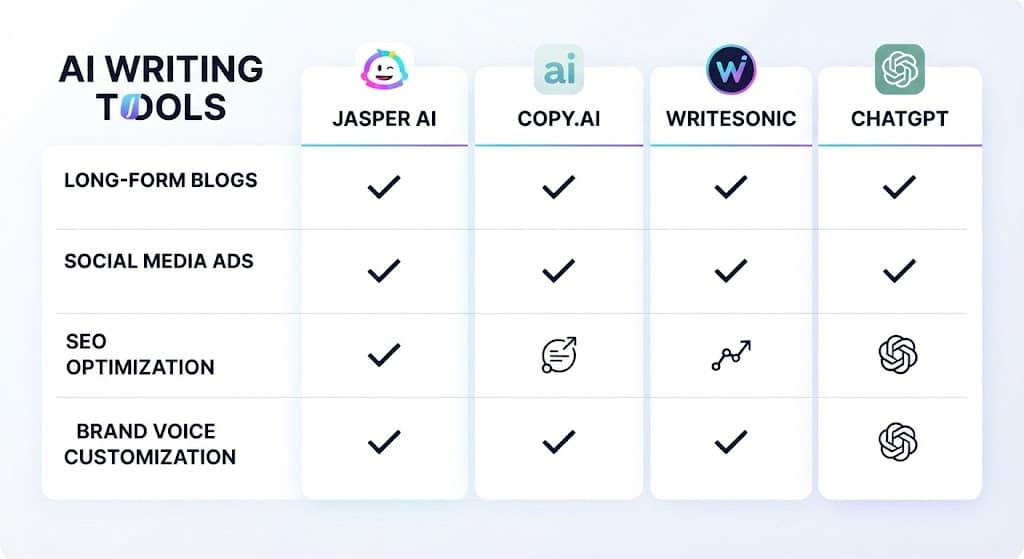
- Jasper AI: One of the earliest and most established AI writing platforms. Jasper is built for marketing teams, with templates for blog posts, ads, and email. Its Brand Voice feature helps maintain consistency across large content operations. Best for: agencies and enterprise marketing teams.
- Copy.ai: Strong for short-form copy — think ad headlines, product descriptions, and social captions. It’s beginner-friendly with a generous free tier. Best for: small businesses and solopreneurs.
- Writesonic: A balanced tool that handles both short and long-form content, with an SEO integration that helps optimize as you write. Best for: bloggers and content marketers who want SEO baked in.
- Surfer SEO + AI: Not a standalone generator, but Surfer’s AI integrates content creation with real-time SEO scoring. You write, and it tells you exactly what to add to compete for your target keyword. Best for: SEO-focused content teams.
- ChatGPT (with GPT-4o): Arguably the most flexible option. With the right system prompt and context, GPT-4o can produce remarkably human, nuanced content. It’s not purpose-built for content marketing, but its versatility makes it powerful for advanced users. Best for: experienced writers who want maximum control.
- Claude (Anthropic): Particularly strong at long-form reasoning, nuanced tone, and following complex instructions. Writers who need content that sounds human — not just coherent — often prefer Claude for editorial work. Best for: quality-focused writers and researchers.
For a detailed side-by-side performance review, check out our dedicated feature on Jasper vs. Copy.ai vs. ChatGPT: Which AI Writing Tool Is Right for You?
5. How to Use an AI Content Generator Without Losing Your Voice
This is the section most guides skip — and it’s the most important one.
AI-generated content has a “sameness” problem. Without guidance, most tools produce content that’s technically correct but flavourless. It checks all the structural boxes but doesn’t sound like you or your brand. Here’s how to fix that.
- Step 1: Start With a Detailed Brief, Not Just a Topic
Instead of typing “write a blog about email marketing,” try this:
“Write a 1,200-word blog post targeting email marketing beginners. Tone: conversational, slightly witty, no jargon. Primary keyword: email marketing tips. Include a hook about most people making the same avoidable mistake. Structure: intro, 5 actionable tips with examples, a quick FAQ, and a CTA to download our email checklist.”
That level of detail transforms the output. - Step 2: Edit Like a Human, Not a Proofreader
Don’t just check for grammar errors. Read it out loud. Where does it sound stiff? Where does it use five words when two would work? Where does it make a vague claim instead of a specific one? Those are your editing targets. - Step 3: Inject Personal Experience and Examples
Google’s E-E-A-T framework specifically rewards experience — real, first-hand knowledge. Add a sentence or paragraph about your actual experience with the topic. This is something AI cannot fabricate authentically, and it’s what separates content that ranks from content that doesn’t. - Step 4: Use AI for Outlines and Research, Write the Intro Yourself
Your introduction is your first impression. It’s also where your voice is most critical. Let AI draft the body, but write the intro and conclusion yourself. The bookends set the tone. - Step 5: Create a “Voice Document” for AI Prompts
Write a 200-word description of your brand voice — formal or casual, the phrases you use, words you avoid, your typical reader. Paste this at the start of every AI prompt. It’s a game-changer for consistency.
6. AI Content and Google E-E-A-T: What You Actually Need to Know
A lot of people got scared when Google started talking about AI content policies. Let’s clear this up with facts.
Google’s official position (confirmed multiple times through 2023–2024): Google does not penalize AI-generated content. What Google penalizes is low-quality content — content that lacks helpfulness, originality, or accuracy — regardless of how it was written.
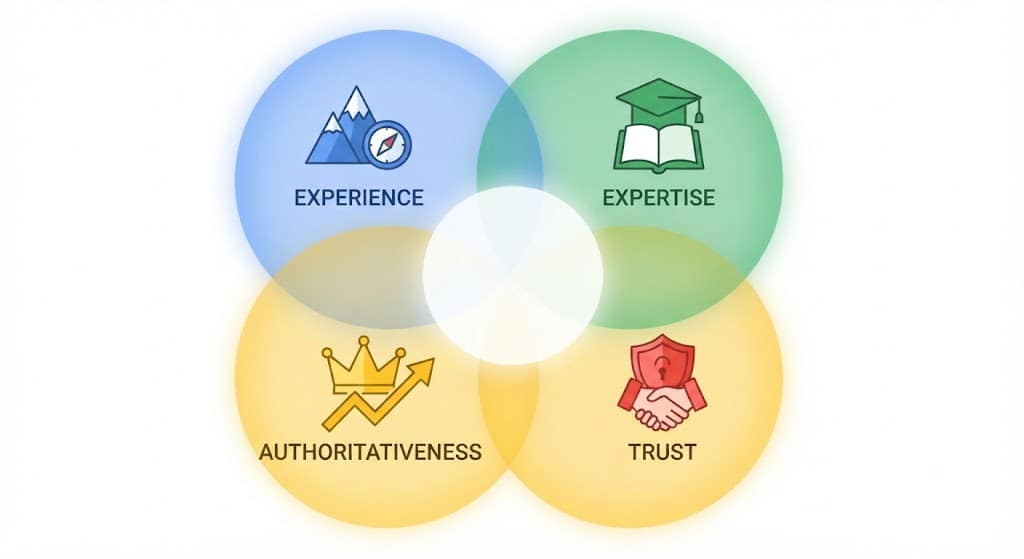
The E-E-A-T framework stands for:
- Experience — Has the author actually done the thing they’re writing about?
- Expertise — Do they demonstrate deep knowledge of the subject?
- Authoritativeness — Is the site and author cited or referenced by others?
- Trustworthiness — Is the content accurate, transparent, and honest?
AI tools can help with structure, SEO, and scale. But E-E-A-T signals come from humans: author bios, bylines, original insights, cited sources, and editorial oversight.
The winning formula: Use an AI content generator for speed and structure. Bring human expertise for depth, experience, and authority signals.
7. Pros and Cons of AI Content Generators
✅ Pros
- Massive time savings — First drafts in minutes, not hours
- Consistent output — No good days or bad days; the tool performs reliably
- SEO-friendly structures — Most tools are trained on well-structured content
- Breaks writer’s block — Excellent for ideation and outlining
- Cost-effective at scale — Especially for high-volume content needs
- Multilingual capability — Produce content in 25+ languages
- Always available — No waiting on a writer’s schedule
❌ Cons
- Can hallucinate facts — Always verify statistics and claims
- Lacks authentic experience — Cannot draw from real personal stories
- Risk of generic output — Without good prompting, content sounds bland
- Requires editing investment — Raw AI output rarely publishes as-is
- Ethical considerations — Transparency with readers is still evolving
- Over-reliance risk — Can weaken your own writing skills over time
- No competitive intelligence — AI doesn’t know what your competitors are doing right now
8. Common Mistakes People Make with AI Writing Tools
After watching thousands of content teams adopt AI tools, these are the patterns that consistently lead to poor results:
- ❌ Mistake 1: Publishing AI Output Without Editing
The single biggest mistake. Raw AI content is a draft, not a final product. It needs a human pass for accuracy, tone, and originality before it goes live. - ❌ Mistake 2: Using Vague Prompts
“Write a blog about SEO” will get you a generic blog about SEO. Specificity is everything. The quality of your output is directly proportional to the quality of your input. - ❌ Mistake 3: Ignoring Fact-Checking
AI models can state incorrect statistics, misattribute quotes, and describe outdated practices with total confidence. Always verify data points, especially in YMYL (Your Money or Your Life) niches like health, finance, or legal topics. - ❌ Mistake 4: Not Adding Any Original Research or Opinion
This is what separates content that ranks from content that sits on page 5. Original data, expert quotes, case studies, and your own perspective are things AI cannot manufacture. Add them. - ❌ Mistake 5: Treating AI as a Set-and-Forget System
The best content operations treat AI as a collaborator, not an employee. Regular prompt refinement, output auditing, and human oversight are what make the system work.
9. Expert Tips for Getting the Best Output
These are the techniques used by professional content strategists who have integrated AI tools into high-performance content operations:
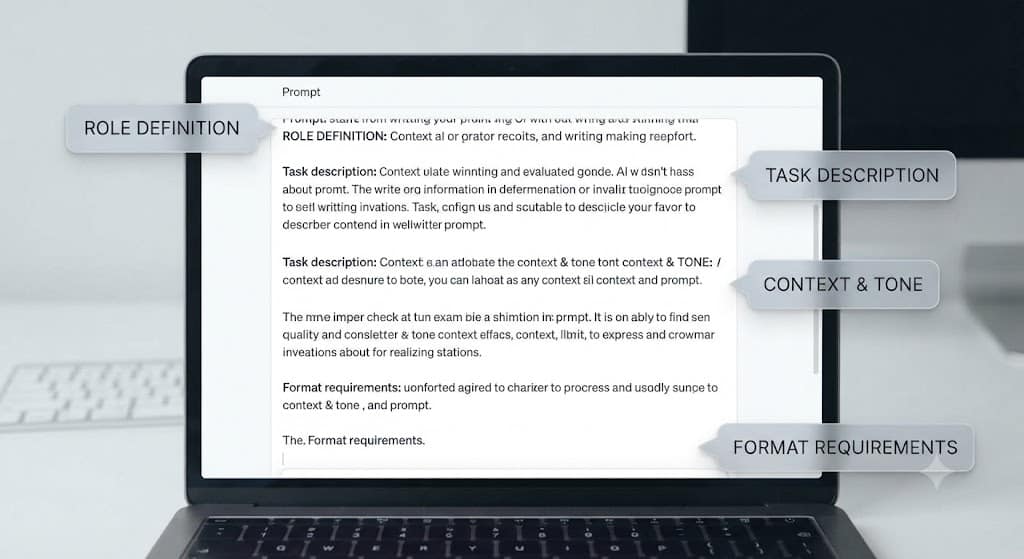
- 🔑 Tip 1: Use the “Role + Task + Context + Format” prompt structure
Start every prompt with: who you want AI to act as, what you want it to do, the context it needs, and the format you want back. This structure alone improves output quality significantly. - 🔑 Tip 2: Generate in sections, not full articles
Instead of asking for a complete 2,000-word article at once, generate section by section. You’ll get better quality and more control over the narrative flow. - 🔑 Tip 3: Use “temperature” thinking
Some tools let you adjust creativity levels. For factual, technical content, keep it low. For creative campaigns and storytelling content, push it higher. - 🔑 Tip 4: Feed it your best-performing existing content
Paste a link or excerpt of your top content and ask AI to “write in this style.” It learns your patterns quickly. - 🔑 Tip 5: Build a prompt library
Save your best-performing prompts the same way you’d save a great email template. Reusable prompt frameworks save enormous time over months of work.
10. FAQs About AI Content Generators
- Q1: Will Google penalize my site for using AI-generated content?
Not automatically, no. Google has confirmed that AI content is not inherently against their guidelines. What matters is quality. If your content is helpful, accurate, original, and serves the user’s intent — it can rank, regardless of how it was produced. The risk comes from publishing unedited, low-quality, or spammy AI output at scale. - Q2: Can AI content generators replace human writers?
Not entirely — and probably not in the ways that matter most. AI can handle structure, first drafts, and volume. But human writers bring original thinking, real-world experience, emotional intelligence, and the ability to craft content that builds genuine connection with readers. The future is human-AI collaboration, not replacement. - Q3: Which AI content generator is best for SEO?
For SEO-specific content, tools like Surfer SEO (with built-in AI), Writesonic with SurferSEO integration, or using ChatGPT/Claude with a detailed SEO-focused prompt tend to produce the strongest results. The key is always human editing to add E-E-A-T signals after generation. - Q4: How do I make AI content sound less robotic?
Specificity is the cure for robotic writing. The more specific your prompts — with tone guidelines, examples, audience details, and brand context — the more natural the output. Post-generation editing to inject real examples, personal voice, and shorter sentences makes a huge difference too. - Q5: Is it ethical to use AI to write content?
Yes, when done transparently and responsibly. The ethical considerations involve disclosure (some audiences expect to know if content is AI-assisted), accuracy (don’t publish hallucinated facts), and quality (don’t use AI to flood the internet with low-value content). Used to enhance quality and efficiency — not to game or spam — AI content generation is a legitimate professional tool.
11. Final Verdict
AI content generators are genuinely transformative — but only in the right hands. If you approach them as a shortcut to skip the thinking, the strategy, and the editing, you’ll get exactly what that approach deserves: content that doesn’t rank, doesn’t resonate, and doesn’t convert.
But if you treat an AI content generator as a high-powered collaborator — one that handles structure, speed, and volume while you bring expertise, voice, and editorial judgment — you unlock something genuinely powerful. You produce more content. Better content. Faster.
The writers and teams who are winning with AI right now aren’t the ones who found the best tool. They’re the ones who developed the best process. They write better prompts. They edit more rigorously. They add more of themselves to every piece.
That’s the competitive advantage. And it’s available to anyone willing to invest the time to learn it.
Start small. Pick one tool. Run one project through it. Refine your prompt. Edit the output. Publish it. Measure it. Iterate.