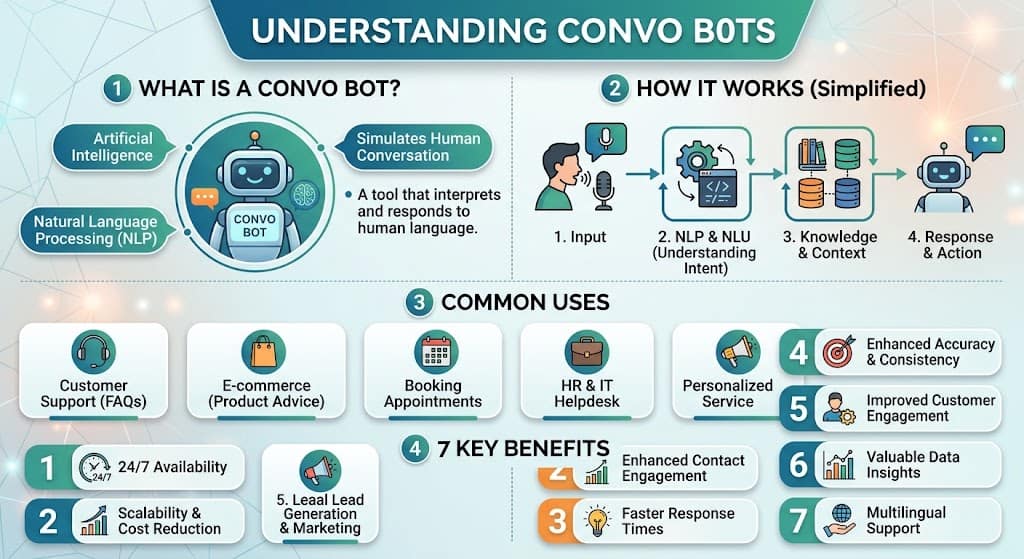
AI transformation is a problem of governance, not technology. Learn why governance decides success and how to build a framework that works.
Why AI Transformation Is a Problem of Governance
Most companies treat AI transformation as a technology upgrade — buy the tools, train the models, roll out the pilots. Yet study after study shows the majority of enterprise AI initiatives never scale past the pilot stage. The reason usually isn’t the technology. It’s that AI transformation is a problem of governance, not engineering: who decides what the AI can do, who’s accountable when it’s wrong, and how the organization controls risk as capability grows.
This article breaks down why governance — not tooling — determines whether AI transformation succeeds, what a working governance framework looks like, and how to start building one inside your organization.
What “AI Transformation Is a Problem of Governance” Actually Means
Direct answer: It means the technical capability to deploy AI usually exists well before the organizational structures needed to manage it responsibly and at scale — and that gap, not the technology itself, is what stalls transformation.
Governance in this context covers three things:
- Decision rights — who approves which AI use cases, and at what risk threshold
- Accountability — who owns outcomes when a model makes a wrong or harmful decision
- Control mechanisms — how the organization monitors, audits, and corrects AI behavior over time
Without these in place, AI projects either get stuck in endless review cycles (because nobody has the authority to approve them) or get deployed recklessly (because nobody was watching for risk). Both outcomes look like “failed AI transformation,” but the root cause is the same: a governance vacuum.
Why Technology Alone Doesn’t Drive AI Transformation
Direct answer: Technology adoption and organizational trust move at different speeds — governance is the mechanism that closes that gap.
A model can be technically ready to automate a decision long before the business is ready to let it. Three patterns show up repeatedly in organizations that struggle:
- Shadow AI proliferation — employees adopt AI tools independently because there’s no sanctioned path to use them, creating unmanaged risk
- Pilot purgatory — proof-of-concept projects succeed technically but never get approved for production because no one owns the go/no-go decision
- Reactive risk management — governance only gets built after an incident (a biased hiring model, a leaked prompt, a compliance breach) rather than before deployment
In each case, the technology worked. The organization didn’t have the structure to trust it, scale it, or contain it.
The Core Elements of an AI Governance Framework
Direct answer: A working AI governance framework needs clear ownership, risk-tiered approval processes, ongoing monitoring, and alignment with regulation and internal policy.
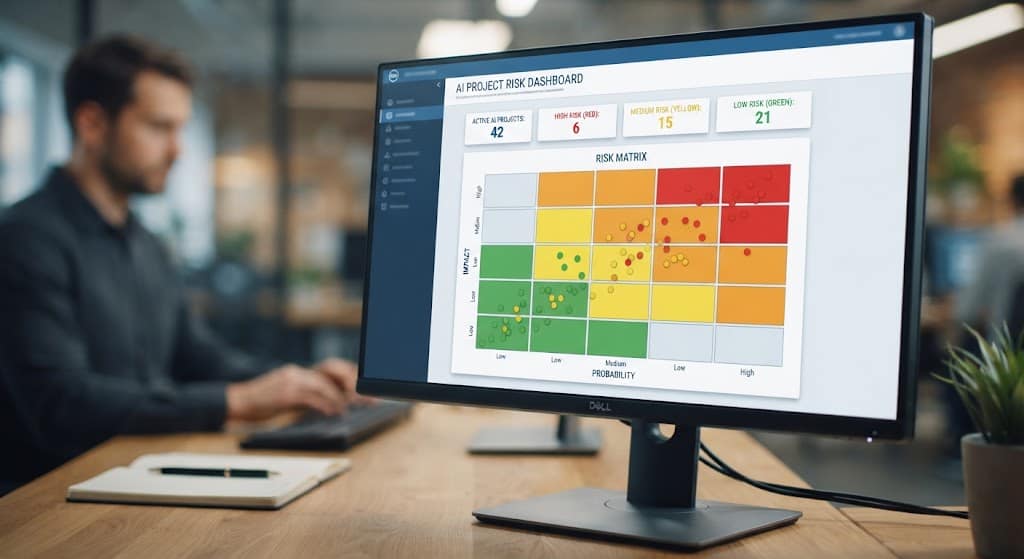
| Element | What It Does | Why It Matters |
|---|---|---|
| Ownership structure | Assigns a person or committee (e.g., AI governance board, Chief AI Officer) accountable for AI decisions | Removes ambiguity about who approves or halts a project |
| Risk tiering | Classifies AI use cases by potential impact (low, medium, high risk) | Lets low-risk use cases move fast while high-risk ones get proper scrutiny |
| Model documentation | Records what data trained a model, its intended use, and known limitations | Enables audits and reduces liability exposure |
| Human oversight checkpoints | Defines where a human must review or override an AI decision | Prevents fully automated harm in sensitive contexts |
| Monitoring and drift detection | Tracks model performance and bias over time | Catches degradation or unintended behavior before it causes damage |
| Regulatory alignment | Maps internal policy to frameworks like the NIST AI Risk Management Framework or the EU AI Act | Keeps the organization compliant as external rules evolve |
Each element above exists because AI transformation is a problem of governance long before it becomes a technical rollout. Organizations that build these elements before scaling AI consistently move faster afterward — not despite governance, but because of it.
How Governance Failures Actually Show Up in Practice
Direct answer: Governance failures rarely look like one dramatic incident — they show up as slow erosion of trust, stalled projects, or compliance gaps. These patterns are further proof that AI transformation is a problem of governance, not a one-off technical glitch.

Common warning signs include:
- Multiple departments running AI pilots with no shared evaluation standard
- No documented answer to “who approved this model going live?”
- AI-generated outputs used in customer-facing decisions with no human review
- Legal or compliance teams finding out about AI deployments after the fact
- No process for retiring or retraining an underperforming model
Any one is manageable alone. Together, they compound into institutional risk — reinforcing again that AI transformation is a problem of governance that leadership can’t outsource to IT alone.
Building AI Governance: A Practical Starting Point
Direct answer: Start small, risk-tiered, and cross-functional — governance doesn’t require full maturity on day one, just a clear first structure.

Form a cross-functional governance group — legal, IT, data, security, and a business-line representative
Inventory existing AI use — many organizations are surprised how much AI is already in use informally
Define risk tiers — agree on what counts as low, medium, and high-risk in your context
Set approval thresholds — decide which tier requires sign-off, and from whom
Pilot the framework on one use case — refine before rolling out organization-wide
Align with external standards — reference NIST’s AI RMF or ISO/IEC 42001 rather than building from scratch
This sequencing matters because it treats the real issue head-on: AI transformation is a problem of governance, and governance built too heavy, too early, kills momentum just as surely as skipping it does.
FAQs
Q: What does it mean to say AI transformation is a problem of governance?
A: It means the biggest barrier to scaling AI in most organizations isn’t the technology — it’s the lack of clear decision rights, accountability, and risk controls needed to deploy it responsibly.
Q: Why do so many AI pilots never make it to production?
A: Usually because no one has clear authority to approve them for production use, or because risk owners weren’t involved early enough to sign off with confidence.
Q: What’s the difference between AI strategy and AI governance?
A: AI strategy defines what the organization wants to achieve with AI. AI governance defines how those initiatives get approved, monitored, and controlled responsibly.
Q: Do small and mid-sized companies need formal AI governance?
A: Yes, though it can start lightweight — a small cross-functional review group and basic risk tiering is often enough to start, scaling up as AI use grows.
Q: What frameworks can organizations reference when building AI governance?
A: The NIST AI Risk Management Framework, ISO/IEC 42001, and the OECD AI Principles are widely referenced starting points.
Q: Who should own AI governance inside a company?
A: Ownership varies, but it typically sits with a cross-functional governance committee or a designated role such as a Chief AI Officer, supported by legal, IT, and business stakeholders.
Q: What happens if a company skips AI governance?
A: Risks compound over time — shadow AI use, compliance exposure, biased or harmful outputs, and eventual loss of leadership confidence in AI investment.
Conclusion
AI transformation is a problem of governance long before it’s a problem of technology. The organizations that scale AI successfully aren’t necessarily the ones with the most advanced models — they’re the ones that built clear ownership, risk tiering, and oversight before scaling up. If your AI initiatives feel stuck, the fix usually isn’t a better tool. It’s a clearer governance structure.
Explore more on building responsible, scalable digital transformation strategies on TechCommand — and share this with your leadership team if governance is the missing piece in your AI roadmap.