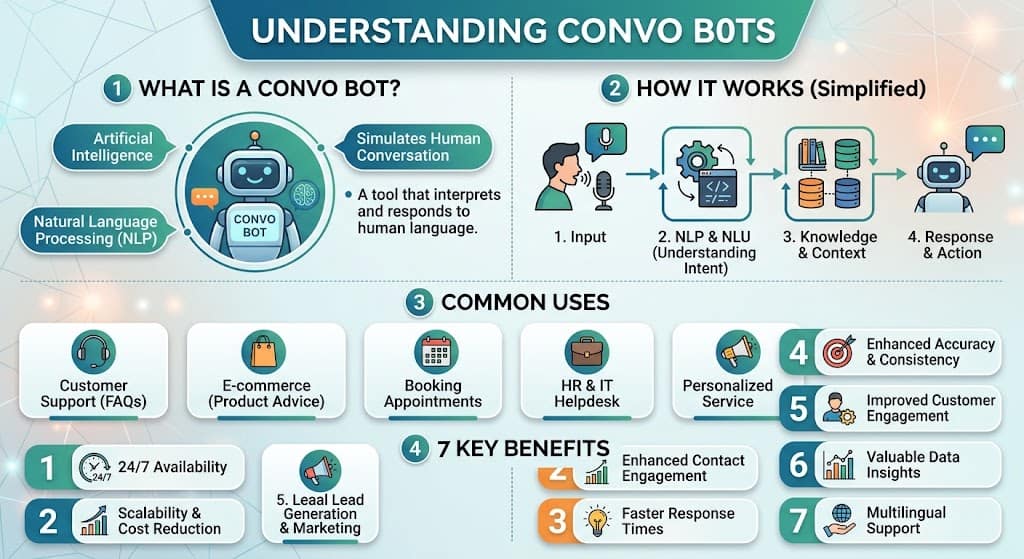
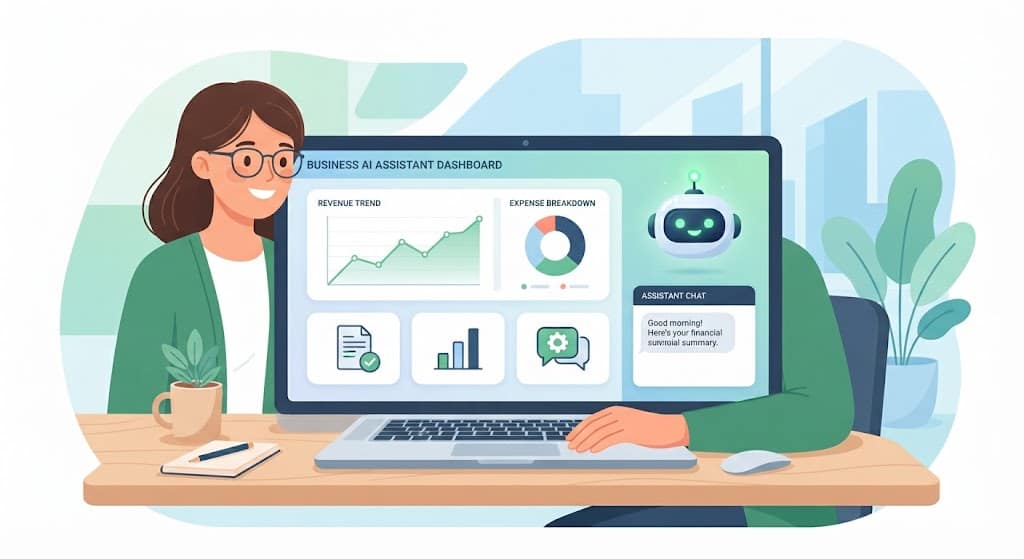
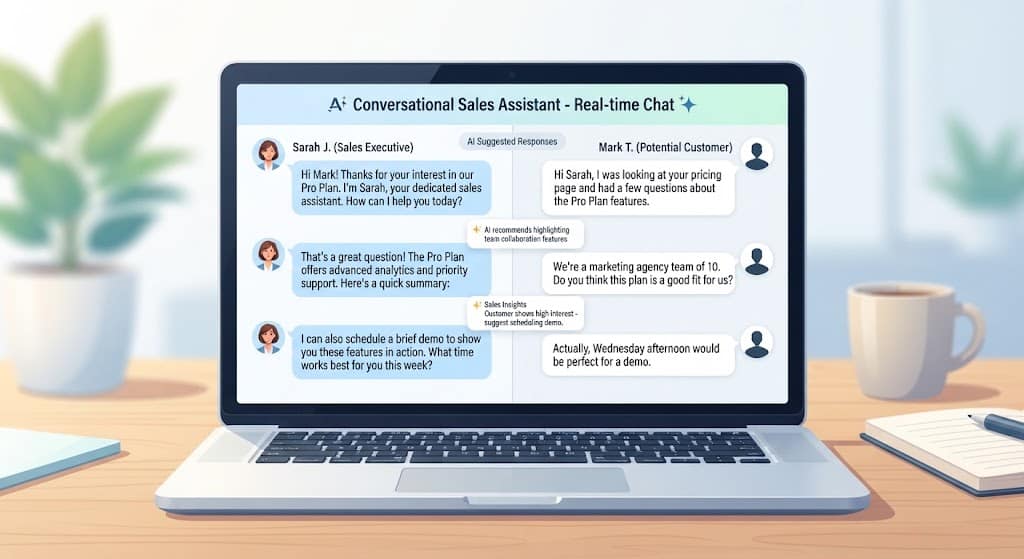
If you have used ChatGPT, you have talked to an AI. But what happens when the AI stops waiting for your next prompt and starts doing the work itself — researching a topic, booking the meeting, checking the numbers, and sending you a finished summary? That is an AI agent.
AI agents are one of the biggest shifts in artificial intelligence in 2026, moving AI from a chatbot you talk to into a capable helper that can plan, decide, and act on your behalf. This guide explains what an AI agent is, how it works, how it differs from a chatbot, and where it is genuinely useful — and where it is not.
What Is an AI Agent?
An AI agent is a software system that uses artificial intelligence to pursue a goal and complete tasks on behalf of a user. Unlike a chatbot, which answers one question at a time, an AI agent can reason, plan, remember context, and take action across several steps without being told exactly what to do at each stage.
Google describes AI agents as software systems that “use AI to pursue goals and complete tasks on behalf of users,” showing “reasoning, planning, and memory” and “a level of autonomy to make decisions, learn, and adapt.” That autonomy is the key difference. You give an agent a goal — “research the best CRM for a team of ten and draft a comparison” — and it works out the steps, uses tools such as web search or a spreadsheet, and returns a result.
A useful way to think about it: a chatbot is like a knowledgeable colleague you ask questions. An AI agent is like a capable assistant you hand a job to. The chatbot responds; the agent works.
How Do AI Agents Work?
Most AI agents follow the same basic loop, whatever they are built to do:
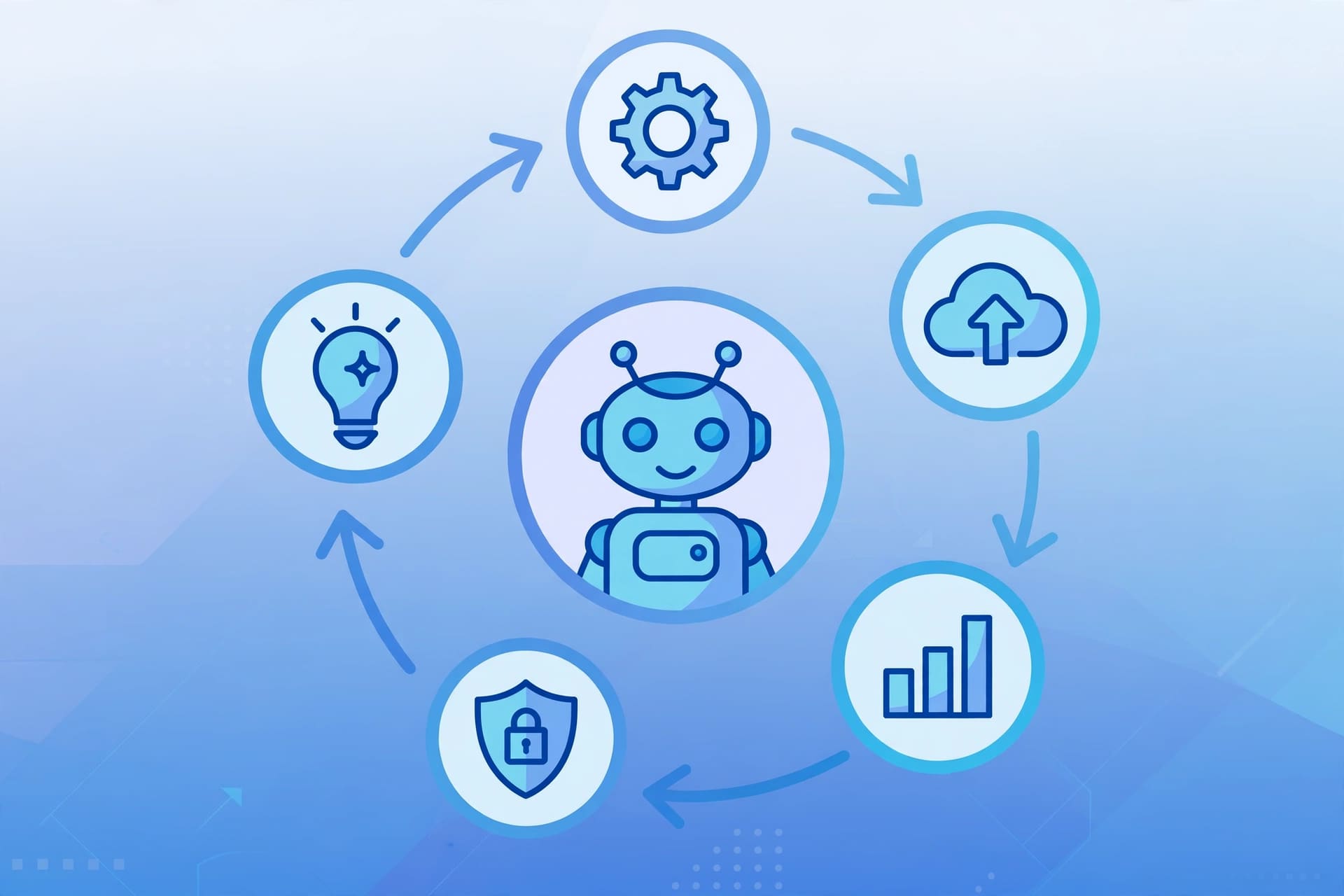
- Perceive. The agent takes in information — your instruction, plus data from its environment such as emails, documents, web pages, or a database.
- Reason. A large language model acts as the agent’s “brain”, interpreting the goal and deciding what to do first.
- Plan. The agent works out a sequence of actions, and adjusts the plan when something unexpected happens.
- Act. It uses tools to carry out the plan: searching the web, calling an API, writing a file, sending a message, or updating a system.
- Observe and learn. It checks the result of each action, keeps the important details in memory, and refines its approach as it goes.
Three ingredients make this possible. Memory lets the agent remember earlier steps and conversations instead of starting from zero each time. Tools are the functions it can call on — web search, a calendar, a code editor, a CRM. And the model underneath, usually a large language model, provides the reasoning that connects the goal to the actions.
AI Agent vs Chatbot vs Automation Bot
These three terms are often used interchangeably, but they describe different things.
| AI Agent | AI Assistant | Automation Bot | |
|---|---|---|---|
| Purpose | Autonomously completes multi-step tasks towards a goal | Helps a user with tasks through conversation | Automates simple, rule-based tasks or replies |
| Autonomy | High — plans and acts with minimal supervision | Medium — responds to requests; the user decides | Low — follows pre-set rules or triggers |
| Complexity | Handles complex, multi-step work and adapts as it goes | Handles everyday tasks and simple requests | Handles repetitive, predictable work |
| Learning | Learns from experience and feedback | Some learning from context | Little or no learning |
| Example | A research agent that gathers sources, compares options, and writes a report | ChatGPT or Gemini answering questions and drafting text | A bot that replies to FAQs or moves data between apps |

A chatbot waits for you. An AI assistant works alongside you. An AI agent works for you, often in the background, and only checks in when it needs a decision or has finished.
Related reading: Automation Bots Explained, The Ultimate AI Chatbot Guide (2026), and The Ultimate Guide to Artificial Intelligence in 2026.
Types of AI Agents
AI agents come in several shapes, depending on how they interact with people and what they are built to do.
By how they work with you
- Interactive agents work in conversation with a user — answering questions, drafting content, and helping with tasks step by step.
- Background agents run quietly on their own, triggered by events or schedules — monitoring data, processing queues, or flagging problems before anyone notices.
By how many agents are involved
- Single agents handle one defined task independently, such as summarising a long document or triaging an inbox.
- Multi-agent systems split a large job between several specialised agents that share information — one researches, one writes, one reviews. They are increasingly common in coding and research work.
By what they do
- Customer agents answer questions, resolve issues, and recommend products across web, chat, and email.
- Employee agents handle internal work: answering policy questions, summarising meetings, and drafting reports.
- Data agents analyse large datasets and surface insights a human might miss.
- Code agents write, test, and review software across an entire codebase.
- Creative agents generate and refine content, images, and campaign ideas.
- Security agents monitor systems for unusual behaviour and help respond to threats.
Real Examples of AI Agents in 2026

- Customer support: an agent reads a customer’s message, checks their order history, issues a refund within policy, and writes a clear reply — escalating to a human only when the case is unusual.
- Research: an agent gathers information from dozens of sources, compares the findings, and produces a structured briefing with citations.
- Coding: a coding agent explores a repository, plans a fix, edits several files, runs the tests, and corrects its own mistakes.
- Sales: an agent qualifies new leads, enriches them with company data, and updates the CRM without anyone copying and pasting.
- Personal productivity: an agent plans a trip, compares options, and drafts an itinerary based on your calendar and preferences.
Benefits of AI Agents
- They save real time. Agents take on the repetitive middle of a task — gathering, sorting, drafting — so people focus on decisions and judgement.
- They work around the clock. An agent can process a queue overnight and have results ready in the morning.
- They handle complexity. Unlike a simple bot, an agent can adjust when the situation changes instead of failing at the first unexpected step.
- They scale. One well-built agent can serve hundreds of users or process thousands of tasks without extra headcount.
- They improve with feedback. Agents that remember what worked — and what was corrected — tend to get more accurate over time.
Risks and Limitations of AI Agents
Agents are powerful, but they are not magic, and the risks grow with their autonomy:
- Mistakes at scale. An agent that misunderstands a goal can repeat the error across hundreds of actions before anyone notices. Human checkpoints on important decisions matter more, not less.
- Unclear reasoning. Language models do not always show their working, so it can be hard to audit why an agent made a particular judgement call.
- Data and privacy exposure. Agents often need access to emails, documents, and internal systems. That access must be limited to what the job requires, and governed under rules such as GDPR in the UK and EU.
- Cost. Running capable models, tools, and memory for an agent can be expensive, especially for tasks that run continuously.
- Over-trust. Agents sound confident and produce polished output, so it is easy to accept their work without checking it. For anything involving money, health, legal, or customer-facing decisions, review the result.
The practical rule: give an agent a clear goal, clear limits, and a human review step for anything that matters.
How to Start Using AI Agents
- Pick one repetitive, multi-step task. Good first candidates: weekly reporting, inbox triage, meeting summaries, or competitor research.
- Write the goal down clearly. Describe the outcome you want and the limits — which systems the agent may touch and what it must never do without asking.
- Start with an existing tool. Many products now include agents: coding assistants, research tools, and customer-service platforms. Try one before building your own.
- Test on low-risk work first. Run the agent on a copy of real data or a non-critical task, and review every output.
- Add a human checkpoint. Decide in advance which actions need approval — sending messages to customers, spending money, or changing records.
- Review after two weeks. Check accuracy, time saved, and any recurring errors before giving the agent more responsibility.
Frequently Asked Questions
What is an AI agent in simple terms?
An AI agent is a software program that can understand a goal, plan the steps to reach it, and carry them out using tools — such as web search or apps — with minimal human supervision. It is more independent than a chatbot, which only answers one question at a time.
What is the difference between an AI agent and a chatbot?
A chatbot responds to messages in a conversation, usually one question at a time. An AI agent takes a goal and works through several steps on its own, using tools and memory, and only asks the user when a decision is needed.
What is an example of an AI agent?
Examples include a research agent that gathers sources and writes a briefing, a coding agent that fixes bugs across a codebase, and a customer-service agent that resolves support tickets from start to finish.
Are AI agents the same as automation bots?
No. An automation bot follows fixed rules to repeat a defined task. An AI agent uses a language model to reason, plan, and adapt, so it can handle work that is not fully predictable in advance.
Are AI agents safe to use?
They can be, with sensible limits: restrict what data and systems an agent can access, require human approval for important actions, and review its outputs — especially for anything involving money, customers, or personal data.
Conclusion
An AI agent is best understood as a goal-driven helper: software that takes an objective, plans the steps, uses tools, and delivers a result, rather than simply answering the next question. That independence is what makes agents so useful — and what makes clear goals, sensible limits, and human review so important. If a repetitive, multi-step task eats hours of your week, that is where an agent is most likely to help. Start small, test on low-risk work, and expand only once you trust the results.